
Prop 6+13
Where is the s***hole of Chula Vista?

Southern California is famous for its golf courses, which are well known for their adaptability in hot and arid environments.
In case you do not know what golf is, this is satire. Please do not read it literally.
Let us look at how golf courses work in the San Diego budget. Surely Commie California is a state where rich people pay their fair share of taxes am I right?
The OG golf course in San Diego County is San Diego Country Club (SDCC). Ironically the country club is in Chula Vista, not San Diego. Founded in 1897, the country club occupies 160 acres of land along Third Ave, one of the main commercial streets in Chula Vista.
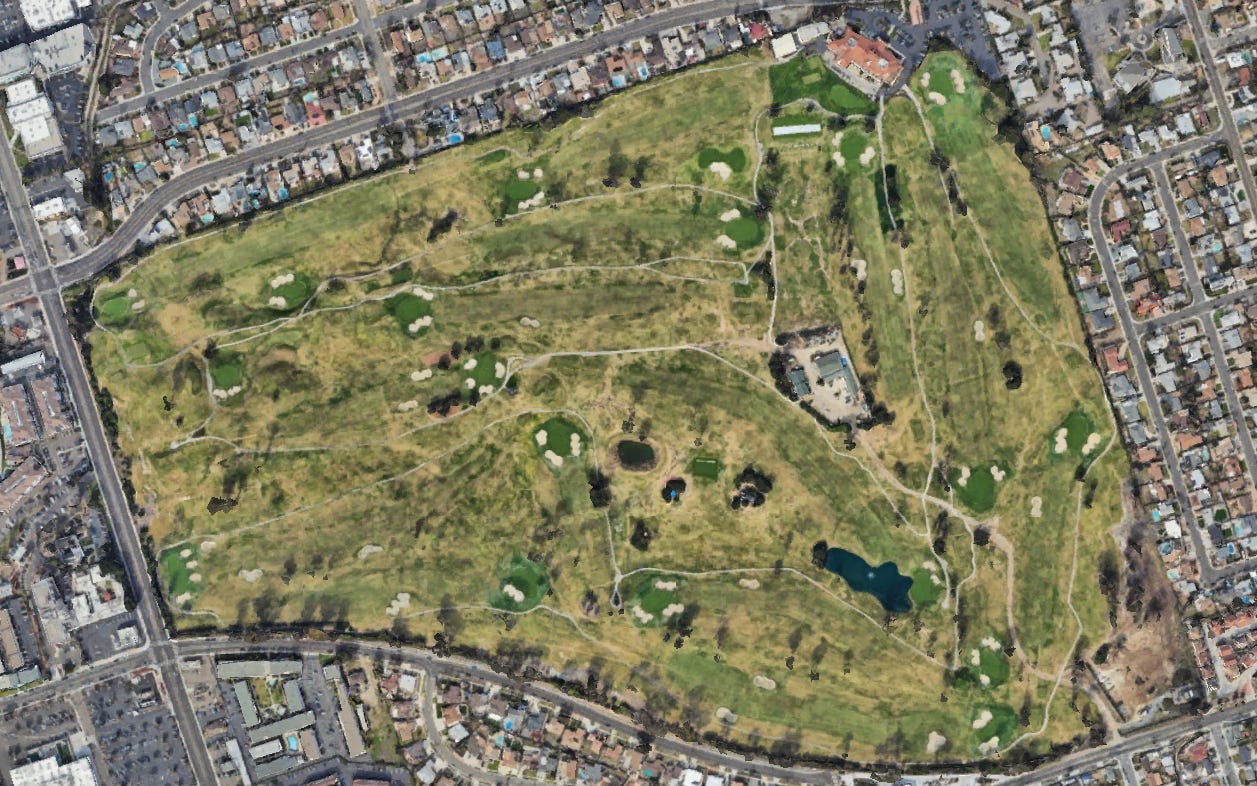
The affluent elite of San Diego go there to mingle with the locals of … what am I saying of course they seclude themselves from the public. Here is one of the rules you have to follow in the club:
Dress Code: Gentlemen are required to wear collared golf shirts, tucked in, with all caps facing forward. Ladies may wear collarless shirts with sleeves or sleeveless shirts with collars. Denim is not permitted on the golf course or practice facilities. Hats should be removed while inside the Clubhouse.
No jeans, not even after Labor Day? Wow SDCC has high standards. Surely SDCC’s high standards translate to an elite property value. After all, SDCC has hosted the U.S. Women’s Open before! And elite property value means high property taxes for Chula Vista, right?
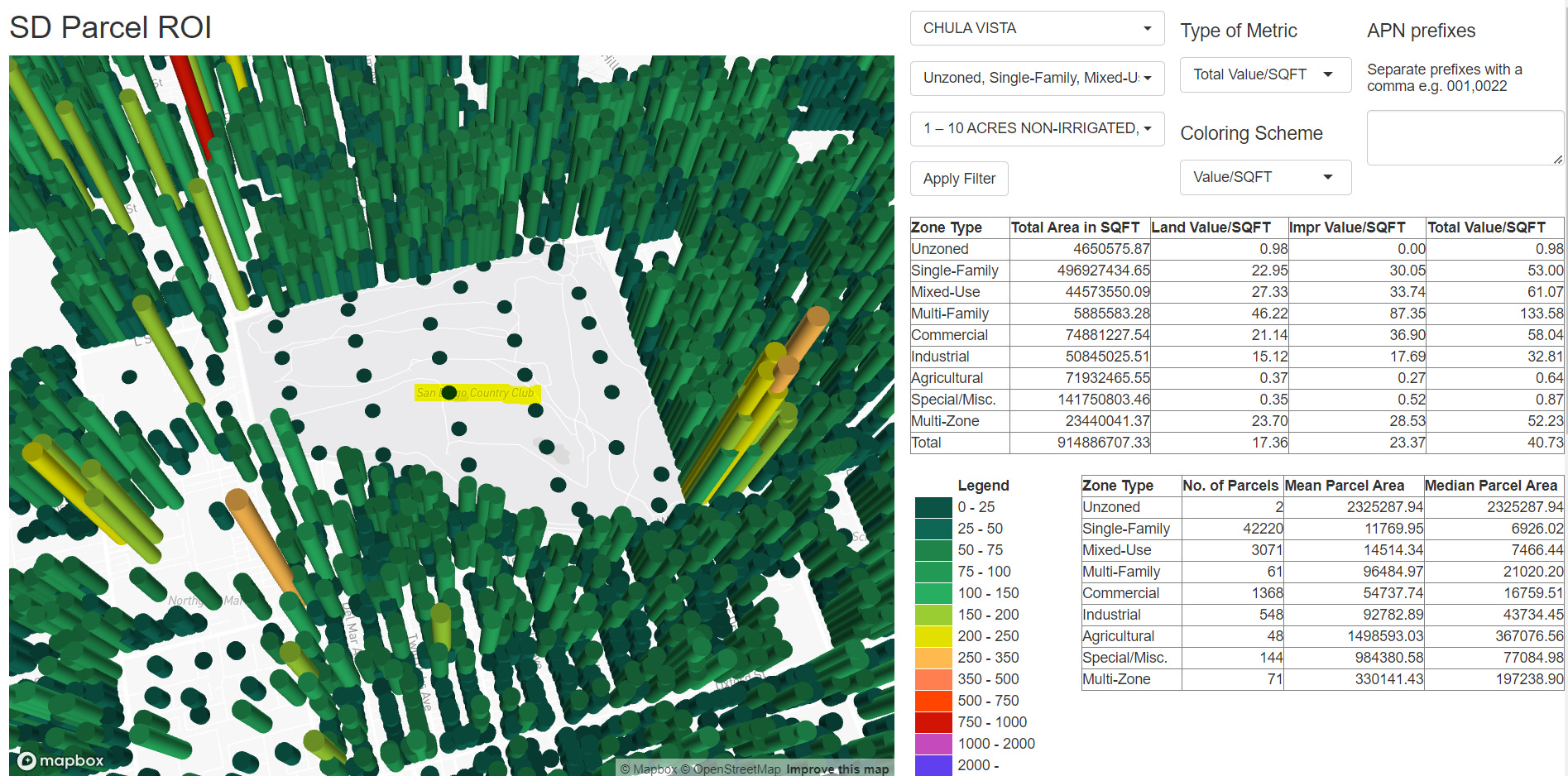
Instead, SDCC is one of the lowest valued parcels in Chula Vista at around $1.27/sqft - only 3% of Chula Vista’s city average of $40.73/sqft. For 160 acres, SDCC is only paying around $90,000 of property tax. It is underpaying the city average by almost $3 million! If you think California’s high sales tax rate makes up for it, SDCC’s 2023 revenue was $8.92 million. Chula Vista’s sales tax rate is 8.75%, so if all that revenue was taxed, we would get $780,500 of sales tax - not even 30% of the property tax gap. Given how SDCC is such an underperformer on the main commercial street - where properties should be highly valued compared to its surroundings - Chula Vista should be doing everything possible to take back that land for redevelopment because even the most average and generic Chula Vista development would yield a 3200% higher return for the city.
It gets worse when you look at the equity side of things. Chula Vista is a predominantly Mexican, working-class neighborhood and most of SDCC’s surroundings are these working-class people’s homes. The homes are much more valuable than SDCC is based on the heights of their columns, but of course these people cannot enjoy SDCC. The people of Chula Vista are paying for the affluent people’s exclusive privilege to enjoy 160 acres of prime Chula Vista land at a close-to-rent-free price.
You might ask: of course the assessed value is lower than the property value in California due to Prop 13, but how can SDCC be assessed at such an exceptionally low price?
The answer lies in an even more ancient proposition - Prop 6 of 1960 - nicknamed the “Bob Hope’s Exemption” due to comedian Bob Hope’s advocacy for the proposition. The proposition’s purpose was to exempt private nonprofit golf courses from the "highest and best use" principle of property taxes - meaning that golf courses should be assessed as if they were literal nuclear wastelands, s***holes, and uninhabitable deserts. The proposition stated that its aim was to “keep California green” (“keep”, because we all know California was one big golf course when the native tribes first migrated here, and white people are just returning California to its original, pre-Homo-sapiens state), even though Bermuda Grass, the most common grass used in golf courses, is an invasive species (the grass is given the name Bermuda Grass because Bermuda was the first place this Eurasian-originating grass became an invasive species in the New World). The proposition was passed after an astroturf campaign and now golf courses in California pay close to null tax and the public is forced to pay their bills.
Here is the original ballot and its for and against arguments. What is shocking is how the for arguments sound like everything you hear from modern day NIMBYs, from fearmongering about “industrial, commercial developments and apartments” (you know, insignificant parts of human life, unlike the life necessity that is a golf course) to public finance projections pulled out of their collared golf shirt ass. Meanwhile, the against arguments read like a 1960 version of this article - one that had the luxury to use the future tense to warn people of the harms because this proposition had not become a reality yet. Everything that the against side warned about has turned into a reality, while no benefits from the for side has become true. And the people of Chula Vista continue to pay for the benefits of SDCC, a golf course that they themselves most likely cannot enjoy.